On 1 October, together with Breaking Habits, which helps organisations with happiness at work, we hosted an afternoon at the Neherlab in Leidschendam. About 25 people from HR, L&D and change came. It is the building where machines once learned to read the post. Halfway through the afternoon one question was on the screen, which a participant had asked us earlier in another session: "It saves a lot of time, but what do you then do with that time?"
That question stayed for the rest of the afternoon. It came back at three of the six tables, and four of the six table sheets were about it. And rightly so. Almost every conversation about saving time with AI is about how much it saves, and almost never about what you do with it afterwards.
Where does the time AI frees up go?
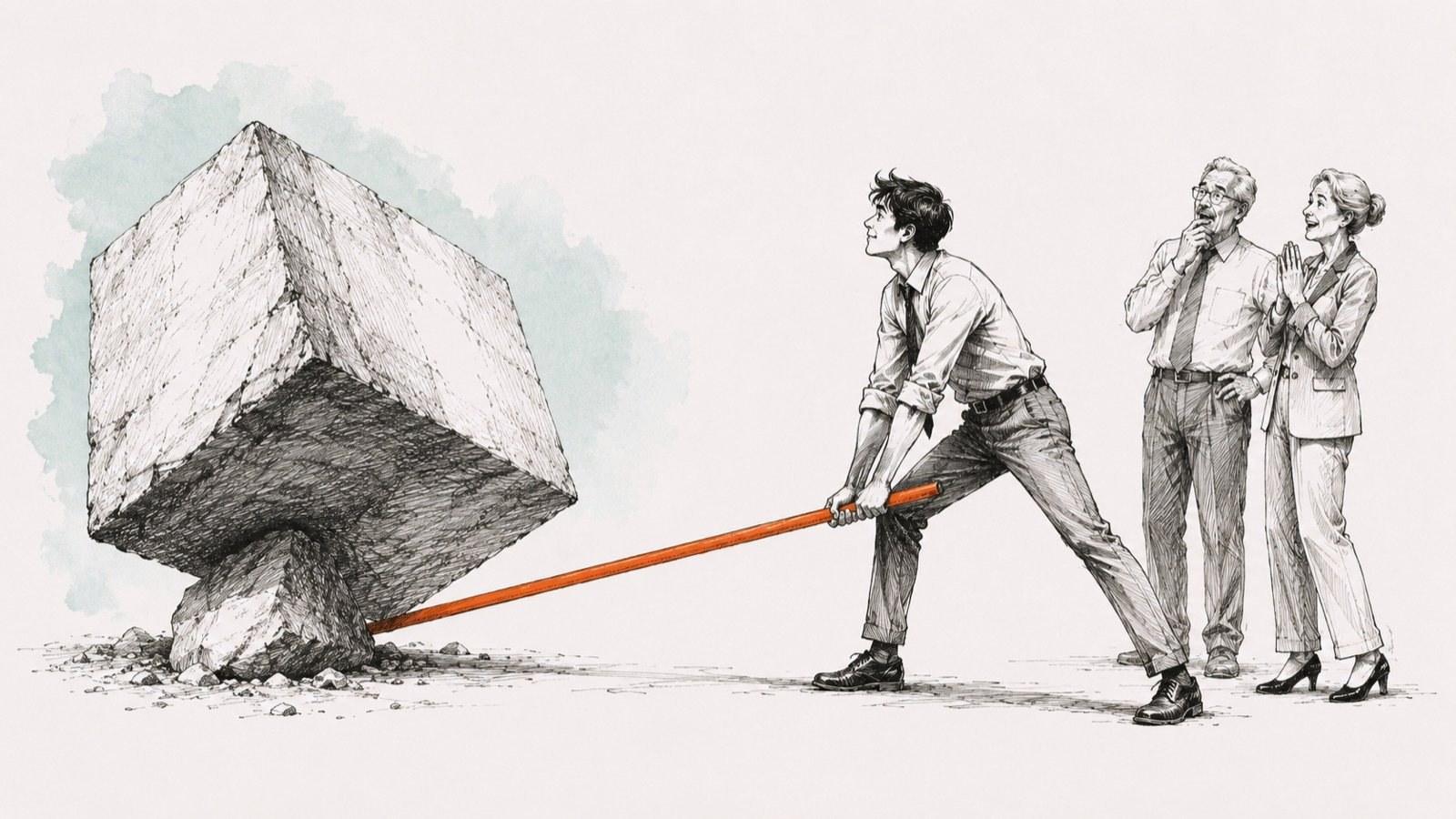
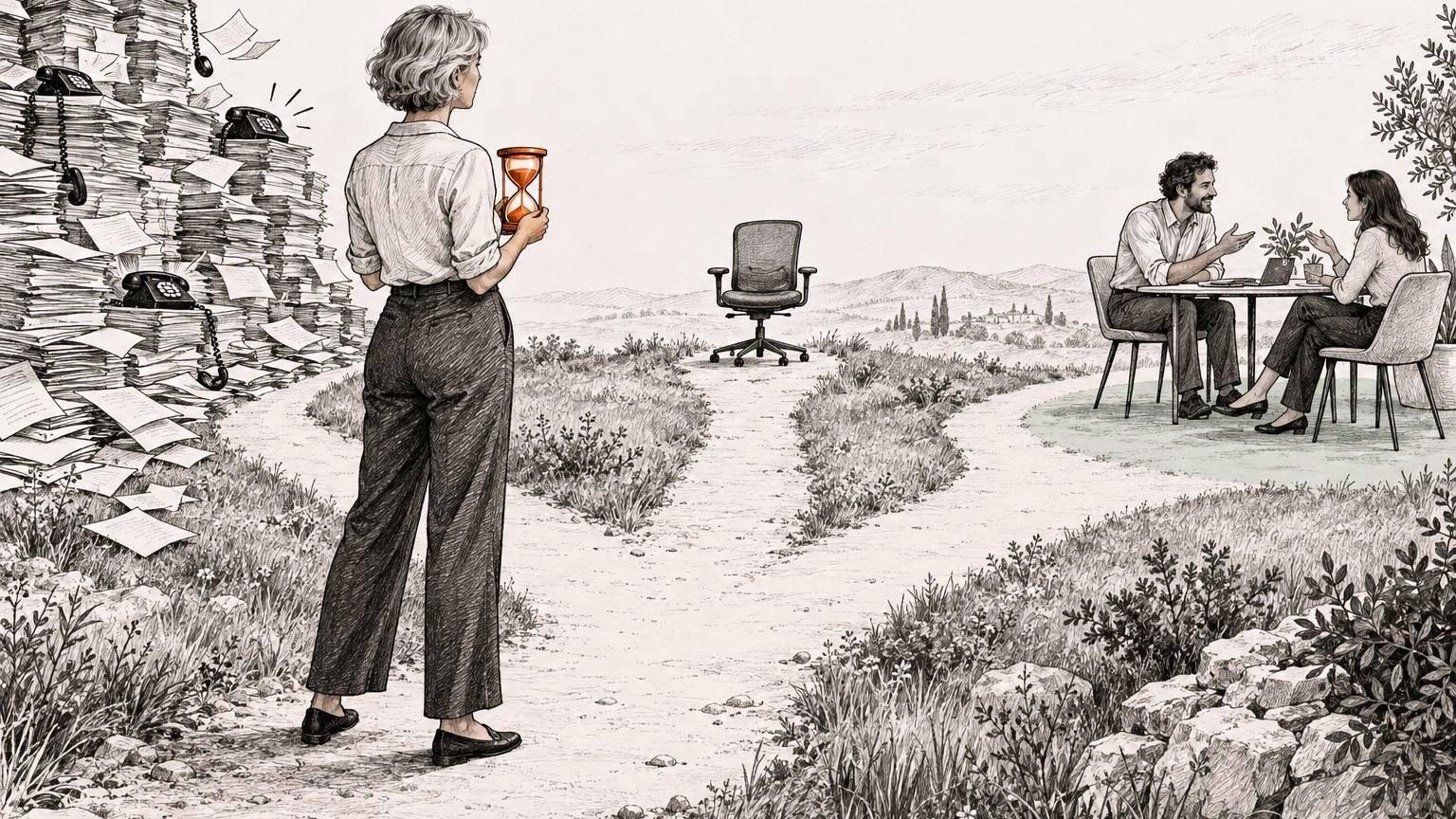
An hour freed up by AI can go three ways: it disappears into more work, it gets cut, or it goes to better work. Which way it goes is a decision, even if nobody makes it.
1. It disappears into more work
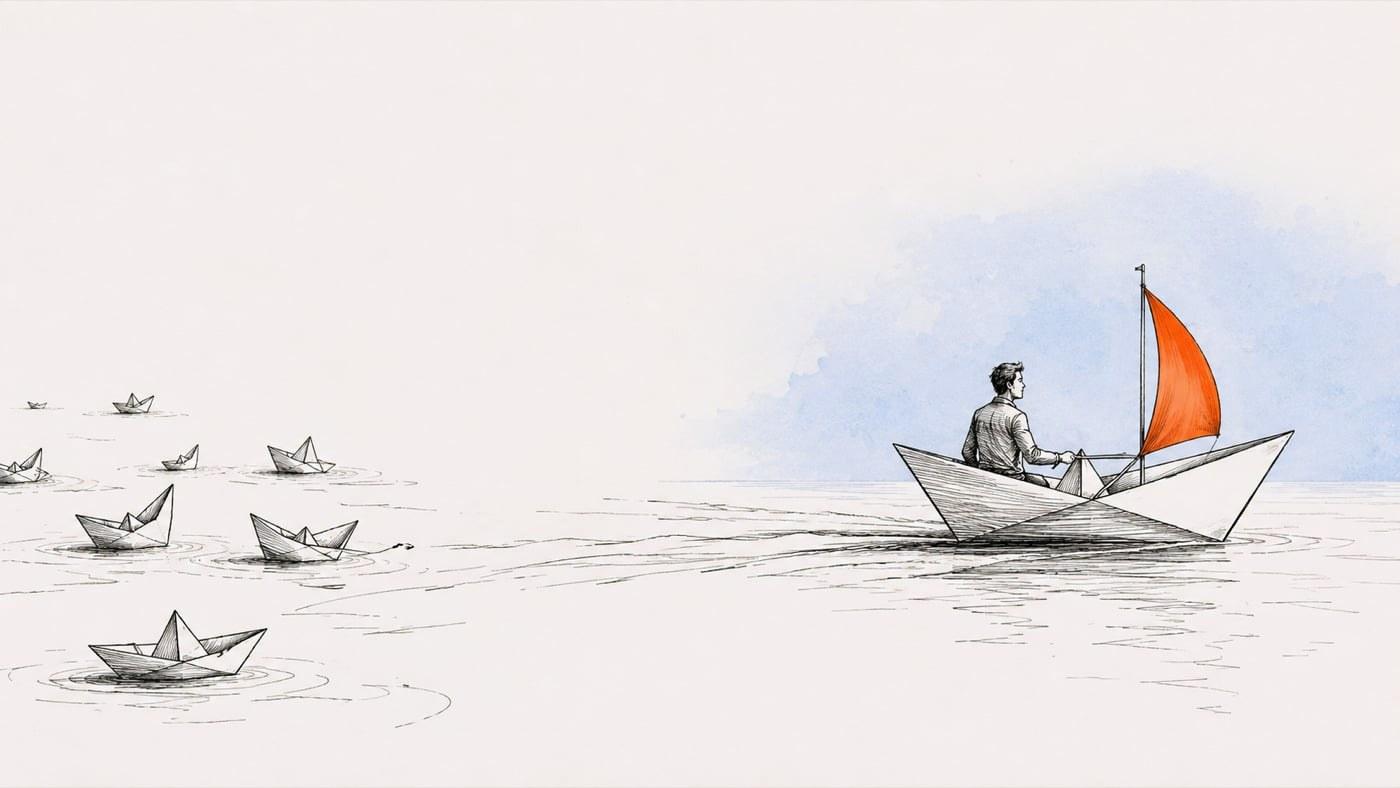
This happens when nobody chooses. A report that used to take an afternoon is now ready in a quarter of an hour. The team then makes three of them. The mailbox empties faster and then fills up faster again. Everyone works more efficiently, nobody works less hard.
In Lenny's Newsletter's annual survey of tech workers (July 2026), the share with serious burnout symptoms rose in one year from 44.7% to 55.7%. Their biggest worry is having to do more for the same money (51%). Losing their job to AI comes far lower (22%). Most still enjoy the work itself. The burnout is in how much of it there is.
Time that frees up without anyone deciding where it goes doesn't go to rest by itself. It goes to more of the same.
2. It gets cut
This is the second way, and it is a legitimate choice. If three people do the work of four, you can leave a vacancy unfilled or let a contract run out. Many business cases for AI are calculated that way.
Only: then call it a choice. AI as a cost saving is a choice. AI as room for the work that could always have been better is one too. If you book the saving quietly, people notice it on the work floor. They feel very precisely when their time gain is really a slimming plan. Then they stop thinking along, and with that goes the enthusiasm you need to make the next automation work.
3. It goes to better work
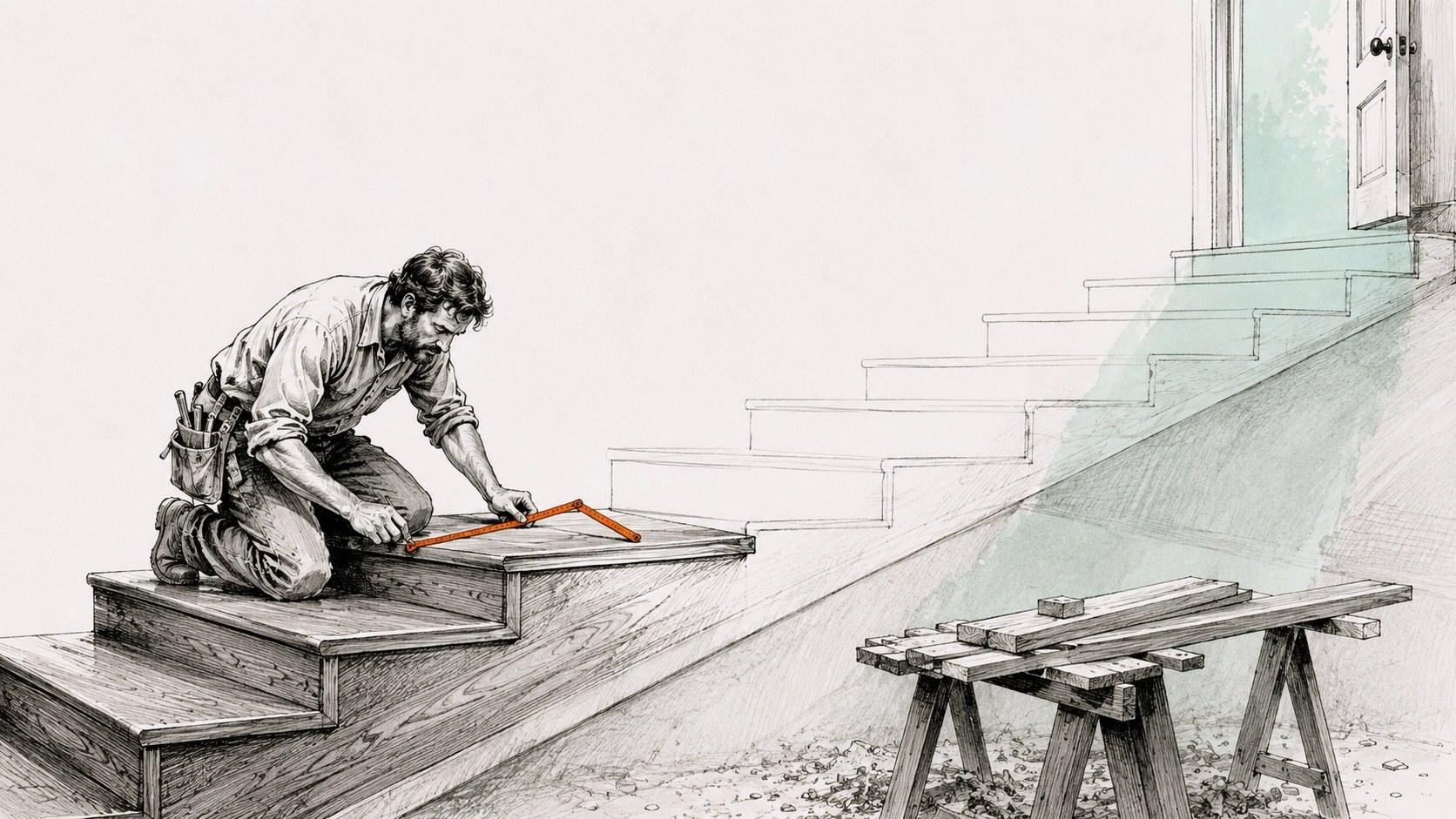
The third way takes the most work. At SIG Benelux the order desk retyped every order: the customer's email on the left, the ERP on the right. 5 to 7 minutes per order, a quarter of an hour for a combined order. Since June 2026 a digital colleague prepares the order as a draft in Dynamics 365. In the measurement over eleven working days in July, 73% of order emails in the central mailbox in Waalwijk became a draft order on their own. That mailbox carries about 15% of all orders, so it is a beginning and not a final score.
More important is where that time should go. The order desk now checks instead of retyping, and has room for quotes, thinking along in projects and cross-selling and upselling. Work there was no time for before, because asking the customer follow-up questions slowed down the processing.
It wasn't easy. Patrick Wijers, sales manager of the order desk, put it like this:
“The hardest thing for an employee is letting go. Normally you're the one who says: I have this, I turn it into this, I press the button. Now this part of the work becomes checking.”
The full story is in the SIG Benelux case.
Why the time doesn't go to better work by itself
Time doesn't go to better work by itself, because without an agreement it fills up with what was already there. People take the path of least resistance, and that is more of the same.
On top of that, the time gain is scattered at first. As long as AI is an assistant that helps with an email here and a summary there, everyone gains a few minutes a day. You can't send those minutes anywhere. Only when a digital colleague finishes a whole task by itself, like order entry at SIG, does a block of time free up that you can do something with. In our work curve that is the leap: from AI as assistant to AI as colleague. At that leap, the question of where the time goes suddenly becomes concrete.
Who decides where the time goes?
Management decides where the time goes, together with the people who do the work. IT makes sure the digital colleague runs safely, and has no say in what people get back for it.
Which work a digital colleague takes on and what the people get in return is a question about roles, craft and ambition. On 1 October one of the tables wrote it sharply on a sheet: how you use freed-up time is not a cutback. Another table went further. In their view, efficiency as a starting point makes nobody happy. Better growth, renewal or simply more enjoyable work.
In our work we see it only succeeds when management does three things itself: decide which work makes way, say what stops, and free up time for the new work. If management doesn't do that, the organisation chooses the first way by itself. More of the same.
How do you start the conversation with your team?
Start before you automate. And have it in the words of the people themselves: time, attention and craft. Efficiency is their manager's word.
Three steps we use in practice:
- Choose the destination per process up front. Before you give a task to a digital colleague, agree where the freed-up hours go. Customer contact? Quality? Development? Write it down, so you can look back on it later.
- Ask the people what they would do with the time. They know where work is being left undone now. At SIG it was obvious: finally time to ask the customer follow-up questions.
- Measure where the time went. Take a baseline before you start and look again a few months later. Look at how much time freed up and also where it ended up. Without that measurement you don't know which way your organisation went.
Frequently asked questions
Isn't time freed up by AI just a saving?
Only if you choose that. Freed-up time can also go to customer contact, quality or new work. It is a management decision, and it helps when that decision is taken out loud.
Does the freed-up time belong to the employee?
Partly. The organisation invests in the automation, so it is also a business case. But if the employee sees nothing in return, you lose the thinking along that the next step needs. Agree on it together, per process.
How do you keep people from fearing for their jobs?
By saying up front what the intention is, and sticking to it. The longer people have to wait to hear what it means for them, the more they fill in themselves. So say it in the same conversation in which you announce the automation.
How do you measure where the time goes?
With a baseline up front and a second measurement after a few months. Look at what people now do in the hours that freed up, as well as the number of hours.
Where to start
In the AI Kickstart we choose one process together, measure up front what it costs, and after four weeks a digital colleague is live. Where the time goes belongs in the strategy session in week five: there management sets the direction, with the measurement alongside.