AI starts with small changes
For most organizations, starting with AI sounds like a massive project. Connecting systems, cleaning data and documenting processes costs valuable time. Yet you can take steps today, without replacing your entire IT environment. By starting small and learning from gained knowledge, you steer step by step towards an AI-mature organization.
Systems don't talk to each other and data is a mess
Many organizations face two objections: they work with different IT systems that don't communicate, and the data has no structure. But that shouldn't stop you from using AI. An AI layer connects your existing systems and lets them work together without having to replace or rebuild anything. And your chaotic data? That's actually a reason to implement AI in your organization. Because AI makes concrete what cleaning up delivers: an automated process that saves you X hours per week. An investment you can actually measure.
How to get started
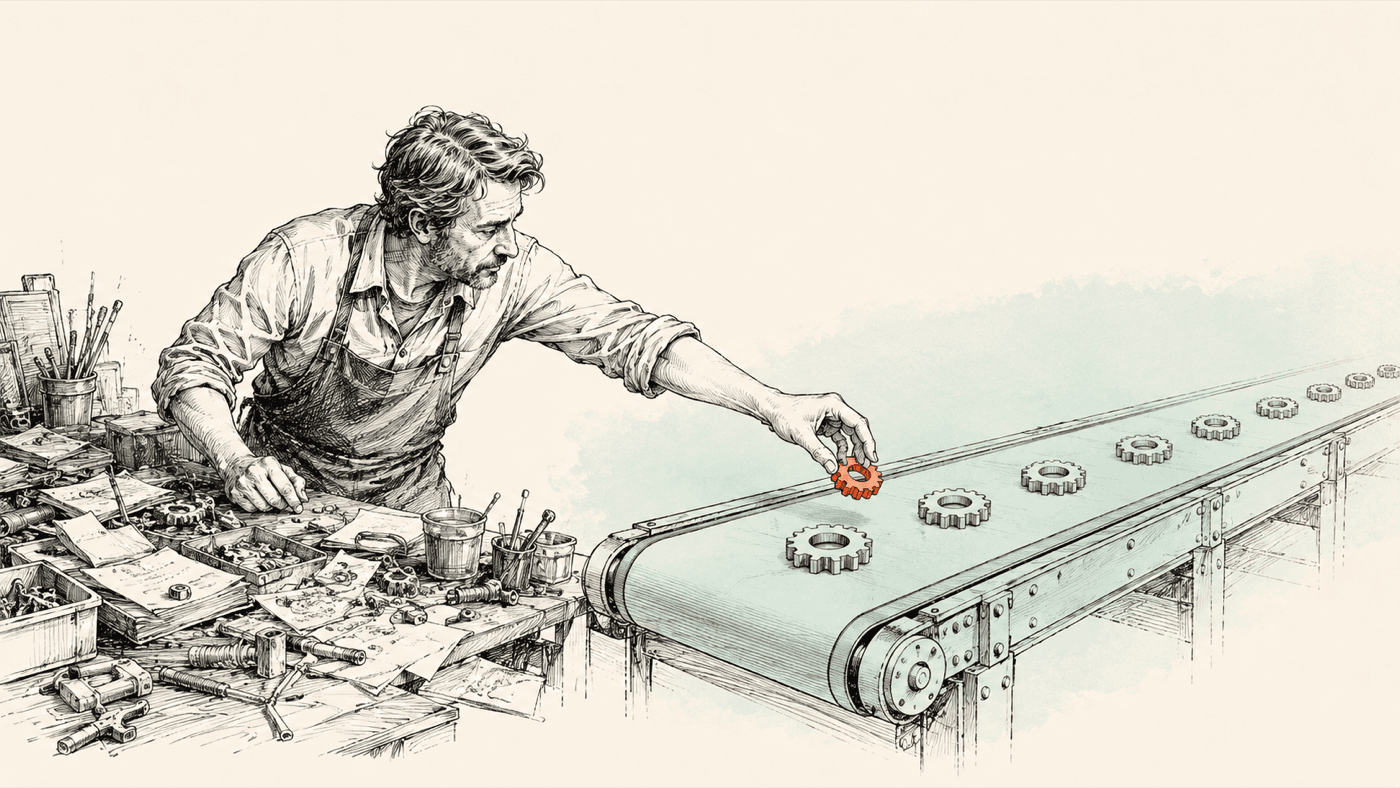
To determine where AI fits best in your organization, use the model above. The more complex the task and the higher the human value, the more people check and evaluate the task. That's why it's wise to let AI start with a simple and repetitive task that's currently done by people but can be automated.
Start with automation
A good example of a process you can easily automate is invoicing. There are enough examples for AI to base itself on to ensure quality. Everyone knows what an invoice should look like, and quality can be objectively checked.
Make it measurable
Once you've determined which process to automate, do a baseline measurement first. Map how much time the process currently costs, how many errors occur and what the lead time is. This way you can later calculate what automation delivers. Make the effects measurable.
Ready to start
To introduce your organization to AI, you only need three things:
- A defined task with a clear beginning and end.
- Enthusiasm and willingness to try. Look around your organization and start with a small team of enthusiasts.
- A baseline measurement, so you can later compare what difference AI has made.